A Mysterious Interstellar Object
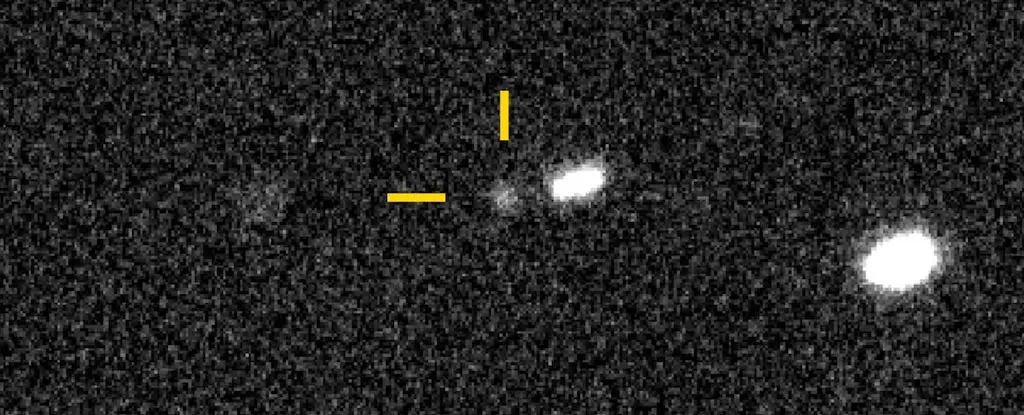
Recently, astronomers from all over the world have been interested in a mysterious interstellar object, 3I/ATLAS. This object seems to have originated in deep space, is possibly older than our Sun, and is unlike anything else in our solar system. It may be the oldest comet ever seen, according to scientists.
We’ll look at what makes this object so special, why scientists believe it to be ancient, and how its discovery affects our knowledge of the cosmos in this blog.
What Is an Interstellar Object 3I/ATLAS?
The term interstellar means something that originates outside our solar system, from the vast spaces between the stars. Until recently, such visitors were only theoretical — until 2017, when astronomers discovered ‘Oumuamua, the first known interstellar object. Then came 2I/Borisov in 2019.
Now, scientists have discovered a third one, named 3I/ATLAS, detected on July 1, 2025, by the ATLAS survey telescope in Chile (NASA).
Like its predecessors, 3I/ATLAS isn’t native to our solar system — it entered from the outer reaches of the galaxy and is now making a brief but spectacular appearance before vanishing forever.
Discovery and Characteristics of 3I/ALTAS
Name and Origin
The ATLAS telescope made the initial detection, and the prefix 3I indicates the object’s status as the third interstellar body to be discovered.Speed and Trajectory
It’s traveling at an astonishing speed of over 130,000 miles per hour as it heads toward the Sun (Space.com).
Its hyperbolic orbit means it’s not gravitationally bound to the Sun—it will pass once and never return.Physical Structure of 3I/ATLAS
Observations from NASA’s Hubble Space Telescope show a coma (a glowing cloud of gas and dust) and a faint tail, both classic signs of a comet (LiveScience).Spectroscopic studies also reveal traces of frozen water, carbon compounds, and ammonia, suggesting it’s rich in volatile ices—the hallmarks of a true comet.
Why Scientists Think 3I/ATLAS Is the Oldest Known Comet
The real intrigue surrounding 3I/ATLAS isn’t just its origin—it’s how ancient it might be.
1. Clues From Its Path Across the Galaxy
Using advanced orbital modeling, astronomers traced 3I/ATLAS back through the Milky Way. It appears to have originated from the “thick disk” region of our galaxy (Science News).
Very old stars and traces of early galactic formation are known to exist in that area. This suggests that 3I/ATLAS may have formed billions of years before our Sun, which is approximately 4.6 billion years old.
2. Estimated Age of 3I/ATLAS
Preliminary analyses suggest that this interstellar comet could be as old as 7 billion years (Phys.org).
older than our solar system, possibly one of the first icy bodies to form after the Milky Way itself took shape.
3. Chemical Composition
The unique composition of ices and cosmic dust on 3I/ATLAS suggests that the object formed under distinct stellar conditions, potentially predating our Sun and orbiting a star that has long since perished. Its material appears less processed and more ‘primitive’ than that of typical solar system comets, reinforcing the idea that it is a fossil from an earlier cosmic era.
4. Scientific Skepticism
Not all astronomers are yet fully convinced. Some argue that the limited data make it hard to confirm its true age or origin.
>A few even suggest alternative theories—like the possibility that it’s a more “ordinary” comet ejected from a young star system not far away (Space.com).
However, the majority agree that its speed, path, and chemistry strongly point toward an ancient, interstellar origin.
Why This Discovery Matters
1. A Window Into Galactic History
3I/ATLAS is a time capsule from the galaxy’s inception if it is indeed billions of years old. By analyzing its composition, we can understand what types of materials existed before the Sun formed and how early comets developed.
2. Learning About Planet Formation
Scientists consider comets the ‘building blocks’ of planets. By studying 3I/ATLAS, they can learn how planetary systems like ours form elsewhere in the universe.
3. Limited Observation Time
Because of its immense speed, 3I/ATLAS will spend only a short time near the Sun before heading back into deep space.
Telescopes like Hubble, James Webb, and the Vera C. Rubin Observatory are working together to capture as much data as possible before it’s gone (LiveScience).
4. A Test of Technology and Cooperation
This discovery showcases how far astronomical technology has come. Ground-based and space-based observatories across the world are coordinating in real time—sharing images, spectra, and trajectory calculations to study a visitor from beyond the stars.
The Wider View: Cosmic Relationships
3I/ATLAS is a messenger from a different star system, not just another comet. The galaxy is full of drifting objects that occasionally travel great cosmic distances to enter our neighborhood, serving as a reminder that we are not alone in our solar system.
Deep questions are also raised by this discovery:
- How many of these interstellar objects go undetected?
- Would comets like 3I/ATLAS have transported organic materials or water between star systems, possibly even supplying the elements for life to the early Earth?
- What can we learn about the Milky Way’s long-term evolution from its existence?
- Each of these inquiries challenges the limits of contemporary astronomy and planetary science.
The discovery of 3I/ATLAS serves as a profound reminder that our solar system is not a closed bubble, but a small neighborhood in a vast, interconnected galaxy. As an interstellar object originating from beyond our Sun’s gravitational reach, it carries with it the secrets of a distant star system—offering us a rare glimpse into the chemical composition</b> and planetary formation of a world we may never visit.
While its hyperbolic trajectory suggests it is only a temporary visitor, the data gathered by telescopes like e=”5″ data-index-in-node=”110″>ATLAS and the Vera C. Rubin Observatory will be studied for decades. Whether it is a fragment of a destroyed exoplanet or a pristine comet-like body, 3I/ATLAS challenges our current understanding of astrophysical phenomena.
As we track it departing back into the darkness of deep space, it leaves us with more questions than answers. But in the world of science, it is those very questions that drive us to look closer at the stars. 3I/ATLAS is not just a passing rock; it is a cosmic messenger, proving that the universe still has plenty of mysteries left to share.
Read about latest blogs. Click here